

Integrating HBOT into Surgical Practice
A Practical Framework for Using Hyperbaric Oxygen in Tissue Salvage, Reconstruction, Trauma, Infection, and Radiation-Damaged Wounds Hyperbaric oxygen therapy, commonly
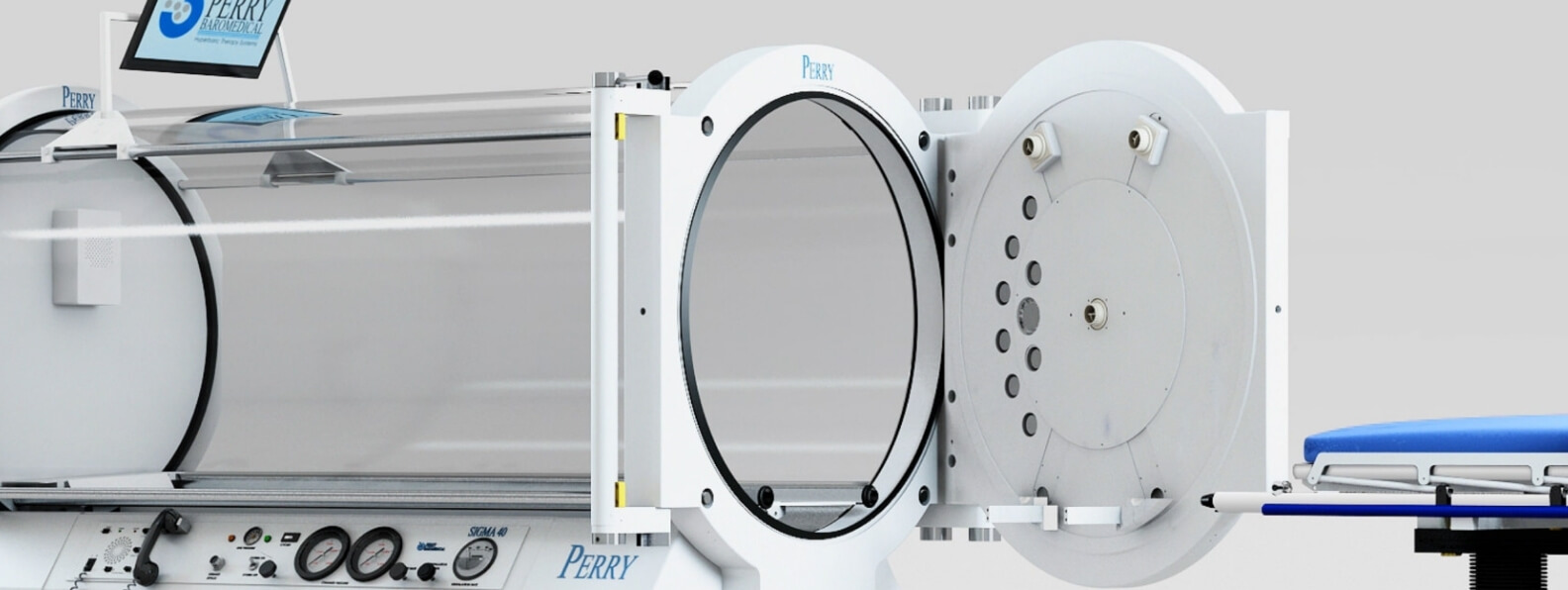
Necrotizing fasciitis is a rapidly progressive infection that destroys fascia, subcutaneous tissue, and surrounding structures. Although the skin may initially show limited changes, extensive injury can already be developing beneath the surface. The infection can progress quickly to septic shock, organ failure, limb loss, and death.
Immediate surgical debridement and broad-spectrum antimicrobial therapy remain the foundations of treatment. Hyperbaric oxygen therapy, or HBOT, may be added at appropriately equipped medical centers, but it must never delay operative exploration, resuscitation, antibiotic administration, or another necessary debridement.
The Undersea and Hyperbaric Medical Society recognizes necrotizing soft tissue infections as an accepted indication for adjunctive HBOT. Infectious disease guidance is more cautious because randomized clinical trial evidence has not established a definitive benefit. The practical point shared across these perspectives is that HBOT can only be considered after the essential surgical and critical care priorities have been protected. (UHMS)
Necrotizing fasciitis can begin after surgery, trauma, a puncture wound, an injection, an ulcer, or another break in the skin. It can also follow blunt trauma without an obvious open wound. Diabetes, cancer, kidney disease, cirrhosis, immune suppression, and vascular disease may increase risk, but the infection can occur in people without a major preexisting condition. (CDC)
Early findings may resemble cellulitis or a routine postoperative infection. Warning signs include:
Pain may become less prominent as superficial nerves are destroyed, so a decrease in pain does not always indicate improvement. The CDC emphasizes that severe pain, rapidly spreading inflammation, and fever require immediate medical attention, particularly after an injury or operation. (CDC)
Laboratory testing and imaging may support the diagnosis, but neither should postpone surgery when clinical suspicion is high. CT or MRI may demonstrate fascial thickening, fluid, gas, or deep tissue involvement, yet the definitive diagnosis is often made during operative exploration.
Risk-scoring systems can help organize clinical information, but they are not sufficiently reliable to exclude necrotizing fasciitis in a patient with concerning symptoms. Clinical deterioration should outweigh a reassuring score.
Necrotizing fasciitis cannot be treated successfully with oxygen or antibiotics alone. Infected and devitalized fascia has poor blood flow, which limits antimicrobial delivery and allows bacterial toxins and inflammatory injury to continue.
The patient requires prompt surgical consultation and operative exploration. IDSA guidance recommends immediate surgical involvement when an aggressive soft tissue infection is associated with systemic toxicity or suspicion of necrotizing fasciitis or gas gangrene. (IDSA)
Surgical treatment may include:
The first operation is often only the beginning of source control. Patients commonly require repeated exploration because tissue that appeared viable initially may later declare itself nonviable. The surgical team must continue debridement until no advancing necrosis or infected tissue remains.
HBOT should be scheduled around operative care. A chamber session should never take priority over an indicated return to surgery.
Empiric antimicrobial treatment should begin as soon as necrotizing fasciitis is suspected. Therapy must initially cover a broad range of possible organisms because the infection may be polymicrobial or caused by a single aggressive pathogen.
IDSA recommends broad empiric coverage such as an anti-MRSA agent combined with therapy active against gram-negative and anaerobic organisms. When group A streptococcal necrotizing fasciitis is documented, penicillin plus clindamycin is recommended. Clindamycin is commonly included because it suppresses bacterial protein and toxin production in addition to its antimicrobial activity. (IDSA)
Potential pathogens include:
Antibiotic therapy should be narrowed when operative cultures, blood cultures, Gram stain findings, and susceptibility testing provide reliable microbiologic information.
A superficial wound culture may not accurately represent organisms deep within the fascia. Operative tissue and fluid specimens are generally more useful for directing definitive treatment.
Necrotizing fasciitis frequently produces sepsis, shock, acute kidney injury, respiratory failure, coagulopathy, and severe metabolic disturbances. Patients may need intensive care before and after each operation.
Supportive management may include:
HBOT does not replace any of these interventions. A center considering chamber treatment must be able to maintain the patient’s airway, infusions, monitoring, and hemodynamic support under pressure.
Necrotizing infections create severe local tissue hypoxia. Edema, vascular thrombosis, endothelial injury, inflammatory activity, and increased metabolic demand reduce oxygen delivery at the same time the immune system requires oxygen to control infection.
During HBOT, the patient breathes oxygen while exposed to increased atmospheric pressure. This substantially raises arterial oxygen tension and increases the amount of oxygen dissolved directly in plasma.
The oxygen-rich plasma can reach functioning microvessels surrounding the infected area and create a stronger diffusion gradient into hypoxic but viable tissue. Potentially relevant effects include:
HBOT cannot oxygenate tissue that has no functional circulation, and it cannot restore tissue that is already necrotic. Its potential value lies primarily in supporting the viable tissue surrounding the infection while surgery and antibiotics eliminate the source. (PLOS)
The biologic rationale for HBOT has historically been particularly strong in clostridial infections. Clostridial organisms thrive in low-oxygen environments and can produce toxins that cause rapid muscle destruction, hemolysis, vascular injury, and systemic collapse.
Elevated tissue oxygen tensions may inhibit anaerobic bacterial growth and suppress production of certain toxins. HBOT may therefore reduce continued tissue injury while surgery removes devitalized tissue and antibiotics control the organism.
Necrotizing fasciitis is not always anaerobic or clostridial. Many infections involve group A streptococci, staphylococci, gram-negative organisms, or mixed flora. Proposed HBOT benefits in these cases relate more to host immune function, tissue oxygenation, edema control, and inflammatory modulation than to a direct antibacterial effect.
The most important operational rule is that HBOT must not delay surgery.
A reasonable treatment sequence may include:
IDSA does not recommend HBOT for clostridial gas gangrene because benefit has not been proven and transfer or chamber treatment could delay resuscitation and surgical debridement. Hyperbaric organizations support HBOT when it is readily available and integrated without weakening those priorities. (IDSA)
These positions highlight the importance of local capability. HBOT may be more practical at a hospital with an on-site chamber, intensive care staffing, surgical services, and chamber-compatible life-support equipment. Transferring an unstable patient away from immediate operative care solely to obtain HBOT may create more risk than benefit.
There is no single laboratory value, wound appearance, or organism that establishes a mandatory need for HBOT.
A hyperbaric consultation may be considered when:
The patient’s stability matters. Severe shock, an uncontrolled airway, active hemorrhage, or an untreated pneumothorax may make immediate chamber treatment unsafe.
Critically ill or mechanically ventilated patients can be treated in selected hospital-based hyperbaric facilities, particularly multiplace chambers with trained inside attendants. This requires chamber-compatible ventilators, infusion systems, monitoring equipment, and staff experienced in hyperbaric critical care.
Treatment protocols vary according to infection severity, suspected organisms, surgical findings, patient stability, and facility practice.
Hyperbaric medical organizations have described early, relatively intensive treatment during the period of active progression. Some protocols provide multiple sessions during the first 24 to 72 hours, followed by additional treatments according to infection control and tissue response. A 2025 prospective observational study noted that hyperbaric recommendations commonly involve early treatment, with twice-daily sessions during the initial period and more intensive treatment when gas gangrene is suspected. (Springer Link)
A chamber treatment may involve pressure in the range of approximately 2.0 to 3.0 atmospheres absolute, oxygen-breathing periods, and scheduled air breaks. No single pressure, duration, or number of treatments has been proven optimal for every patient.
Treatment planning must account for:
HBOT should be discontinued or postponed when it interferes with a more urgent intervention. Progressive necrosis during a treatment course requires surgical reassessment, not simply another oxygen exposure.
The evidence remains encouraging but uncertain. Randomized controlled trials have not established that HBOT causes a reduction in mortality, amputation, or organ failure. Most published evidence comes from retrospective studies, registries, cohort studies, and meta-analyses of observational data. (Springer Link)
A 2024 analysis of 60,481 surgically treated U.S. hospital admissions found that fewer than 1 percent received HBOT. After statistical adjustment, HBOT was associated with lower in-hospital mortality and lower amputation risk. However, the database did not provide the timing, pressure, number, or duration of hyperbaric treatments, and its retrospective design could not eliminate selection bias. (PLOS)
A 2025 Scandinavian prospective observational study included 405 patients, 325 of whom received HBOT. Thirty-day mortality was 7 percent in the treated group and 43 percent in the untreated group. The investigators emphasized that patients receiving HBOT were less acutely ill at baseline, creating substantial selection bias. They concluded that the association was promising but did not establish causation and that a randomized trial remains necessary. (Springer Link)
This distinction is essential. Observational studies repeatedly associate HBOT with improved survival, but they cannot prove that HBOT itself produced the difference. Centers capable of delivering HBOT may also have greater experience, faster surgical access, specialized critical care, or different referral patterns.
HBOT should therefore be described as a biologically plausible and clinically accepted adjunct at some centers, not as a proven replacement for standard treatment or a guaranteed method of improving survival.
Potential hyperbaric complications include:
An untreated pneumothorax is generally considered an absolute contraindication. Chest trauma, pulmonary air trapping, seizure risk, implanted devices, and unstable cardiovascular disease require individual assessment.
The most significant practical risk may be disruption of essential care. Moving a patient between the operating room, intensive care unit, and hyperbaric chamber requires coordinated staff, equipment, and contingency planning. A medical center should not provide HBOT for necrotizing fasciitis unless it can maintain the same standard of critical care inside and around the chamber.
Survival from necrotizing fasciitis often requires extensive removal of skin, fascia, muscle, or an extremity. After the infection is controlled, patients may face a prolonged period of wound management and reconstruction.
Ongoing care may include:
HBOT may support threatened tissue during the acute infection, but it does not eliminate the physical and emotional consequences of extensive surgery.
Patients and families may have little time to process rapidly changing decisions about debridement, amputation, organ support, and survival. Clear communication is part of appropriate care. The clinical team should explain that aggressive surgery is not a sign that treatment has failed. It is often the intervention that makes survival possible.
HBOT may be incorporated when the facility can deliver it promptly and safely without compromising source control. Its role is to support, not replace, the combined efforts of surgery, infectious disease treatment, intensive care, wound reconstruction, and rehabilitation.
A Practical Framework for Using Hyperbaric Oxygen in Tissue Salvage, Reconstruction, Trauma, Infection, and Radiation-Damaged Wounds Hyperbaric oxygen therapy, commonly

A Hospital Blueprint for Coordinated Diagnosis, Limb Preservation, Advanced Treatment, Hyperbaric Medicine, and Measurable Outcomes A multidisciplinary wound care program